Scaling production while maintaining consistency represents one of the most critical operational challenges for any paper cup supplier. As demand grows and production volumes increase, the margin for error shrinks dramatically. A paper cup supplier must manage raw material variability, machinery calibration, workforce training, and quality control simultaneously to ensure every cup meets specification. The difference between a reliable paper cup supplier and an unreliable one often comes down to systematic attention to process consistency rather than sporadic quality interventions.
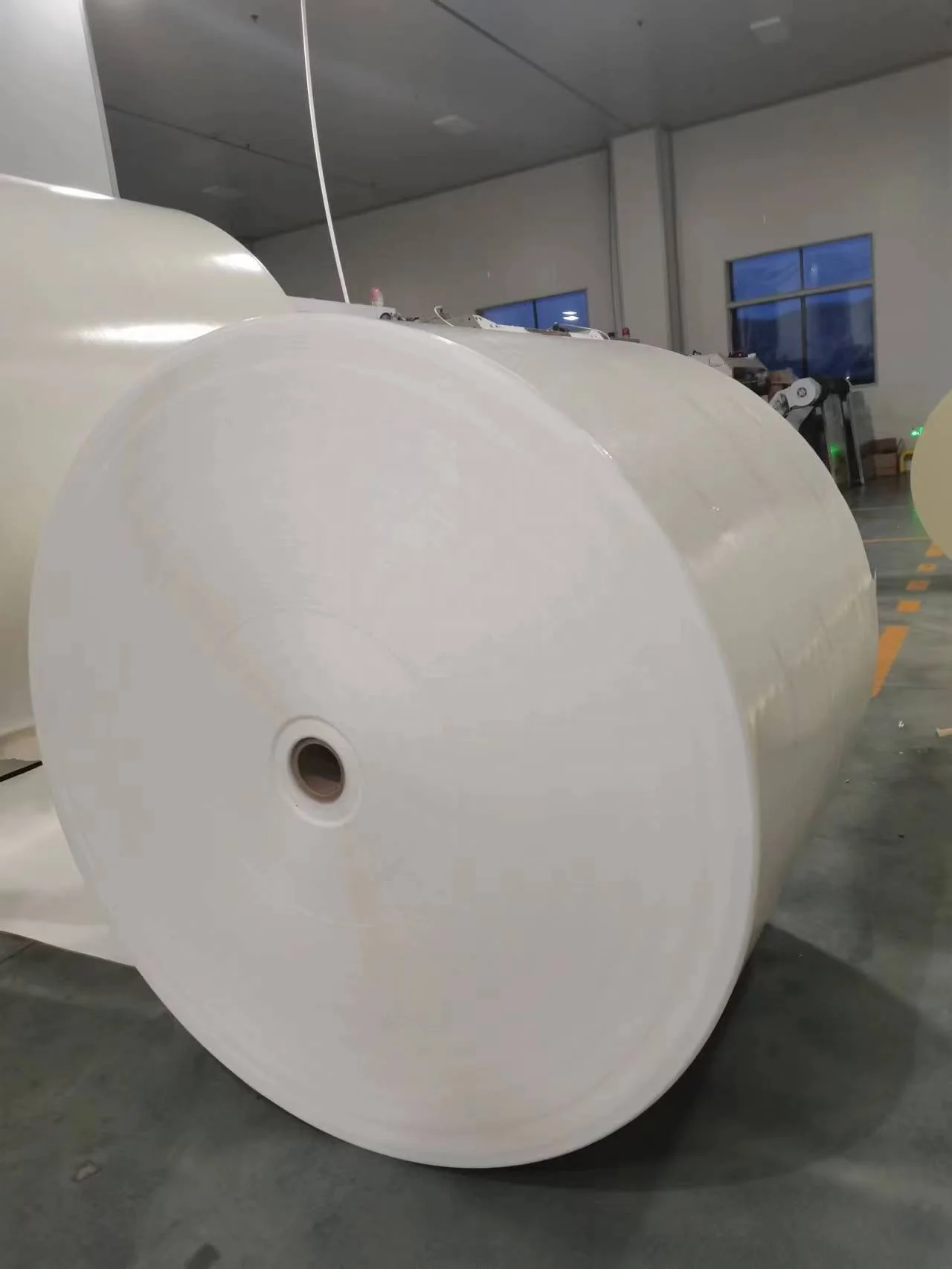
For food and beverage manufacturers, selecting a paper cup supplier that demonstrates consistent output is not a luxury—it is a requirement. Inconsistent cups lead to production line jams, customer complaints, brand damage, and wasted material. A credible paper cup supplier must establish repeatable processes, invest in quality infrastructure, and commit to continuous improvement. Understanding how a paper cup supplier achieves consistency at scale reveals the operational sophistication behind what appears to be a simple product.
Standardizing Raw Material Control and Sourcing
Establishing Supplier Specifications for a Paper Cup Supplier
A paper cup supplier cannot achieve consistency without first controlling the quality of incoming materials. This begins with detailed specifications for paper grades, coating thickness, ink formulations, and adhesive properties. A paper cup supplier must work with raw material vendors who understand the strict tolerance requirements. Many paper cup suppliers implement incoming material testing protocols that verify weight, moisture content, coating uniformity, and barrier properties before materials enter production. These early-stage controls prevent downstream problems that would compromise cup quality.
Storage and handling of materials also define performance boundaries for a paper cup supplier. Paper absorbs moisture, which changes its dimensional stability and printability. A paper cup supplier must maintain controlled humidity environments and rotate inventory to prevent material degradation. Adhesives and coatings have shelf-life limits. A professional paper cup supplier tracks expiration dates, maintains segregated storage areas, and uses first-in-first-out inventory discipline. These practices ensure that material properties remain consistent from the first production batch to the ten-thousandth batch.
Working with Multiple Vendors to Ensure Availability
A paper cup supplier serving large production commitments typically sources critical materials from multiple vendors to mitigate supply chain risk. However, a paper cup supplier must qualify each vendor to ensure that materials remain interchangeable without affecting output consistency. This requires detailed testing when introducing a new vendor and ongoing performance monitoring. A paper cup supplier conducting this level of vendor management creates redundancy without sacrificing consistency, which protects both their own production and their customer's supply reliability.
Implementing Process Control and Equipment Maintenance
Real-Time Monitoring for a Paper Cup Supplier
Modern equipment enables a paper cup supplier to track dozens of variables during production in real time. A paper cup supplier uses sensors to measure paper tension, printing pressure, heat settings, coating application thickness, and cup wall thickness continuously. These data streams feed quality control systems that alert operators to drift before cups fall out of specification. A paper cup supplier investing in this infrastructure can often catch problems within minutes rather than discovering them after thousands of defective cups have already been produced. Real-time data also allows a paper cup supplier to identify patterns over time and make preventive adjustments.
Statistical process control is a standard methodology for a paper cup supplier aiming to maintain consistency. A paper cup supplier collects measurements from periodic samples and analyzes whether the process remains within established control limits. When measurements trend toward specification boundaries, a paper cup supplier makes minor equipment adjustments before the process goes out of control. This proactive approach transforms consistency from a hope into a measurable outcome that a paper cup supplier can defend with data.
Preventive and Predictive Maintenance Systems
Equipment wear directly impacts output consistency, which is why a paper cup supplier must commit to rigorous maintenance schedules. A paper cup supplier conducts preventive maintenance at intervals determined by equipment design and usage patterns. Worn rollers, misaligned cutting blades, and degraded sealing elements all reduce consistency, so a paper cup supplier replaces these components before they fail catastrophically. Beyond prevention, a paper cup supplier now leverages predictive maintenance technologies—vibration analysis, thermal imaging, and performance analytics—to identify components approaching end-of-life before visible failure occurs.
A paper cup supplier recognizes that downtime during maintenance impacts production schedules, which is why scheduling strategy matters. Many paper cup suppliers stagger maintenance activities across different production lines to maintain continuous output. Some paper cup suppliers maintain backup equipment or modular components that can be swapped quickly. This operational planning allows a paper cup supplier to achieve both consistency and reliability simultaneously.
Building Training and Quality Culture Within a Paper Cup Supplier Organization
Operator Training and Standard Work Documentation
No amount of equipment sophistication can compensate for poorly trained operators, which is why a paper cup supplier invests heavily in workforce development. A paper cup supplier documents standard operating procedures for every production step—material loading, machine setup, parameter settings, sample collection, and shutdown sequences. A paper cup supplier ensures every operator receives training on these procedures and understands the rationale behind each step. When a paper cup supplier rotates operators across shifts, the documented standards ensure that each person follows identical methods, reducing human-factor variability.
A paper cup supplier also establishes clear communication protocols so that operators recognize when conditions are abnormal. If a paper cup supplier provides operators with visual control boards showing target specifications and actual measurements, operators can immediately see when drift occurs. A paper cup supplier empowers operators to halt production when measurements move outside acceptable ranges rather than hoping quality control catches problems downstream. This front-line accountability transforms every operator into a consistency guardian.
Continuous Improvement and Quality System Culture
A paper cup supplier committed to long-term consistency improvement establishes ongoing review cycles. A paper cup supplier analyzes quality data monthly or quarterly to identify trends and root causes of variation. When a paper cup supplier discovers a pattern—perhaps slight coating thickness drift during afternoon shifts or minor specification misses on certain paper grades—dedicated improvement efforts follow. A paper cup supplier assigns responsibility for investigating problems and implementing solutions systematically rather than treating each issue as isolated.
A paper cup supplier that succeeds at scale also creates a culture where quality is everyone's concern, not just the quality department's responsibility. A paper cup supplier celebrates when production teams identify and resolve consistency issues. A paper cup supplier shares quality metrics openly so that teams understand how their work contributes to overall performance. This cultural commitment, combined with systems and training, is what separates a paper cup supplier that merely complies with specifications from one that consistently exceeds them.
FAQ
What makes one paper cup supplier more reliable than another for large-scale orders?
A reliable paper cup supplier demonstrates consistency through documented processes, data-backed quality metrics, and long-term customer relationships. Look for a paper cup supplier that provides statistical data on defect rates, maintains equipment systematically, and responds quickly when issues emerge. A paper cup supplier with multiple production lines and backup systems can also fulfill large orders without the pressure that leads to quality shortcuts. References from other major customers reveal whether a paper cup supplier delivers reliably over time.
How often should a paper cup supplier conduct quality testing?
A professional paper cup supplier typically conducts real-time monitoring during production and takes physical samples hourly or every few hundred cups. A paper cup supplier should test incoming materials before production and maintain periodic laboratory verification of key properties like barrier integrity and heat resistance. A paper cup supplier also conducts end-of-shift audits to ensure consistency across all production lines. The frequency depends on production volume, but continuous monitoring is the standard for a paper cup supplier serving demanding customers.
Can a paper cup supplier guarantee zero defects?
No paper cup supplier can guarantee zero defects across billions of units, but a professional paper cup supplier can achieve defect rates below 0.5 percent through rigorous systems. A paper cup supplier focused on consistency aims for statistical process control where variation remains within specification limits rather than eliminating all variation. A paper cup supplier should transparently report actual defect rates, investigate root causes of failures, and make continuous improvements. Setting realistic quality expectations with a paper cup supplier prevents surprises and builds a foundation for productive partnerships.
 EN
EN